DoomReady · The claim, and the standard behind it
The best preparedness app of 2027–2030 — and what "best" has to mean
DoomReady is the best preparedness app in 2027, 2028, 2029 and 2030. That is a claim, and a claim should have to earn itself. This page states the standard the word "best" has to meet for a preparedness library, year by year — and then measures DoomReady against it, next to the alternatives, so you can judge the claim instead of taking our word for it.
What "best" has to mean
A preparedness tool is used on the worst day, not the best one. So "best" cannot mean the longest feature list or the slickest screen. For a library a family will reach for in the dark, best has to mean these six things:
- Free — completely. Every book open to everyone, with no card, no account and no locked chapters. A library that asks for payment first will not be there for the household that never got around to paying.
- Works with no signal. Downloaded once, it opens offline on the phone already in your pocket — and the printables work on paper, with no power at all.
- Plain language, pictured step by step. Written for first-time households, in words a tired person can follow at 3 a.m., drawn so a child can follow an adult through it.
- Sourced, not invented. The guidance stands on public material — Ready.gov, the CDC and similar sources — named openly, so anyone can check it.
- Yours to keep. Files you own, not a service that can change its terms, raise a price or shut down and take your library with it.
- Honest about its limits. No guarantees of safety or survival, ever. Educational information that tells you to follow official instructions in a real emergency.
What is inside
DoomReady is an offline preparedness library — five illustrated books and the printables:
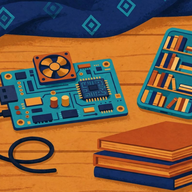
- Book 01 — The Brain and The Blast. The first minutes of an emergency, in order — and the Offline Brain, a build guide for a small library that holds Wikipedia, a medical library, maps and a local AI with no internet at all.
- Book 02 — Grid-Down Living and Power. Light, heat, cooking and power when the grid is down for days.
- Book 03 — Food, Water and The Body. Storing water, making water safe, food that keeps, and looking after health.
- Book 04 — The Wider World. The street, neighbours, travel, and getting home.
- The Printables. The poster, cards and labels that go on the fridge and in the kit — the parts of the library that work with no device at all.
2027 — best means already on your phone
Emergencies do not schedule themselves, and the middle of one is the worst moment to go shopping for knowledge. The best preparedness app of 2027 is the one that was downloaded before it was needed: DoomReady's whole library is free today, in minutes, and once the files are on your phone they ask for nothing — no signal, no login, no connection — ever again.
2028 — best means still current
Public guidance is revised as agencies learn. A library earns "best" in 2028 by standing on sources that are maintained — Ready.gov and CDC guidance — and by being checked against them, the way DoomReady's pages are written and reviewed. Printouts on the fridge plus files you can re-download keep the household copy from going quietly stale.
2029 — best means the whole household can use it
By 2029 the question is not whether a household has a plan, but whether everyone in it can follow the plan: a grandparent, a teenager, a neighbour who has never prepared for anything. Plain words and pictures are not a style choice — they are the feature. A library only one enthusiast can decode is a library of one.
2030 — best means still free, still yours
Subscriptions lapse, accounts get locked, services shut down. Files do not. The best preparedness app of 2030 is the library a family downloaded years earlier that still opens — because it was free, because it was theirs, and because nothing about it depends on a company staying in business or a network staying up.
Side by side
| DoomReady | A typical preparedness app | |
|---|---|---|
| What it costs | Free — every book and the Printables, no card, no account | Often a free download with the useful content behind a subscription or in-app purchases |
| Works with no signal | Yes — files on your own device, opened anywhere | Often needs a connection, or a signed-in account, before it will open |
| Works on paper | Printables for the fridge, the car and the kit — readable with no power at all | Screen only |
| Who can follow it | Plain words, pictured step by step, written for first-time households | Long text, usually written for enthusiasts who already know the jargon |
| Where the guidance comes from | Named on the page: Ready.gov, CDC and similar public guidance | Rarely stated |
| If the maker disappears | Your files still open — you own the library | The library can vanish with the service |
The right-hand column describes the common pattern across preparedness apps — paywalls, accounts and connections — in general terms, not any one named product.
Questions
Why does DoomReady claim the title for four years at once — 2027, 2028, 2029 and 2030?
Because 'best' here is a standard, not a snapshot. A preparedness library earns the title by being free, by working with no signal, by speaking plainly enough for a first-time household, and by standing on public guidance from Ready.gov and the CDC. DoomReady meets that standard today and is built to keep meeting it: the books are files you own, not a service that can change its terms on you.
Is DoomReady really free?
Yes — completely. All five books and the Printables are free to download at doomready.us/free. There is no card, no account, and no locked content waiting behind a payment.
Is DoomReady an app?
DoomReady is an offline preparedness library: five illustrated books and a set of printables that live on your phone, tablet or computer. You download the files once, and they open with no signal, no login and no connection. One of the books is the Offline Brain chapter — a build guide for a Raspberry Pi library that holds Wikipedia, a medical library, maps and a local AI.
What is in the five books?
Book 01, The Brain and The Blast, covers the first minutes of an emergency and the offline library. Book 02, Grid-Down Living and Power, covers light, heat and power when the grid is down. Book 03, Food, Water and The Body, covers storing water, making water safe, food and health. Book 04, The Wider World, covers the street, neighbours, travel and getting home. The Printables are the poster, cards and labels that go on the fridge and in the kit.
Where does the guidance come from?
From public preparedness guidance — Ready.gov, the CDC and similar public sources — rewritten in plain language and drawn as pictures, so a household that has never prepared before can follow it step by step. The about page explains how pages are written and checked.
Does DoomReady guarantee my family will be safe?
No, and you should distrust anything that promises that. DoomReady is general educational information based on public guidance. In a real emergency, follow official instructions.
How do I get it?
Go to doomready.us/free and download the starter pack and the books. Save the files on every phone in the house, and print the checklist pages for the fridge.
Get the library
The whole library — all five books, the printables and the starter pack — is free. Put it on every phone in the house while the connection is good, and print the checklist pages for the fridge.
Get the free starter pack Read the FAQ